Veterinary screening-support tool. Final interpretation is made by a licensed veterinarian.
Proof Network #1 · VetDental AI → Pet Tooth AI

AI reads pet dental X-rays
in 12 seconds.

Upload a radiograph and get findings, lesion locations, a treatment plan and an A4 report in one pass. Every result marks its evidence on the image and ships as a draft for veterinary review.

90+
Real cases read
12s
Avg, measured
5,000
DIGIRAY clinics
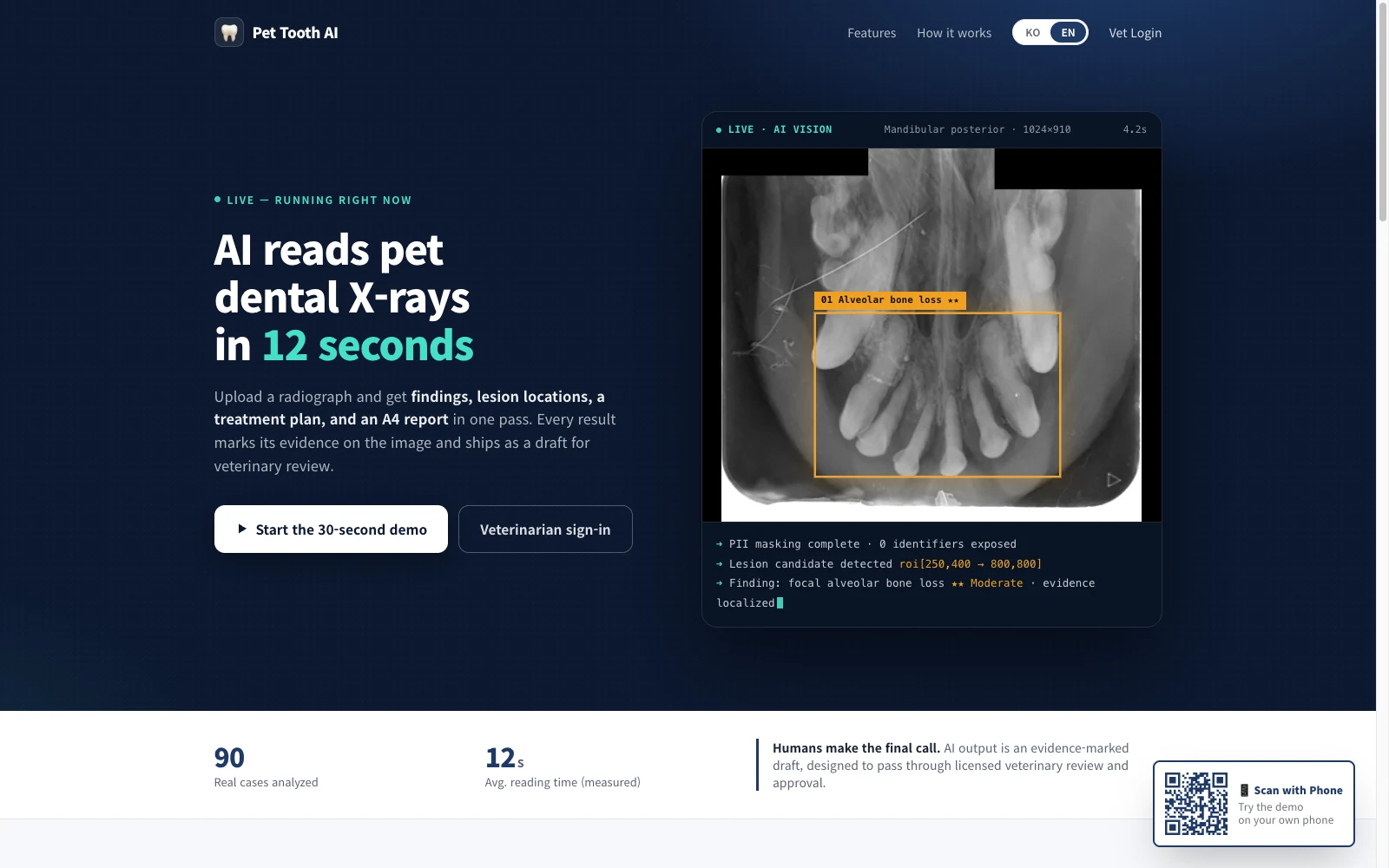
Pet Tooth AI live reading console showing a dental X-ray with a lesion marked by a bounding box

Operated by DIGIRAY Corp. · Free across all features during the beta
Why it matters

Pets cannot point at the pain. The radiograph has to.

Dental disease in companion animals rarely shows on the outside, so radiographic reading is essential — but reading each image carefully and then writing up something an owner can understand takes real time in a working clinic.

Before Pet Tooth AI
Veterinarian reads the image by eye after imagingAI drafts the read on upload — 12 seconds on average, measured
Findings noted verbally or by handStructured findings on a standard vocabulary, with lesion locations marked
Owner consultation material written separatelyA4 report and PDF generated in the clinic's own format (KO / EN)
—Veterinarian reviews, edits and approves the draft → final report
Core principle

A person makes the final call.

AI output is an evidence-marked draft, designed to pass through review and approval by a licensed veterinarian. Reports carry a DRAFT watermark until they are reviewed. This system is not a medical device.

How it works

Three steps, one pass.

01

Send the image

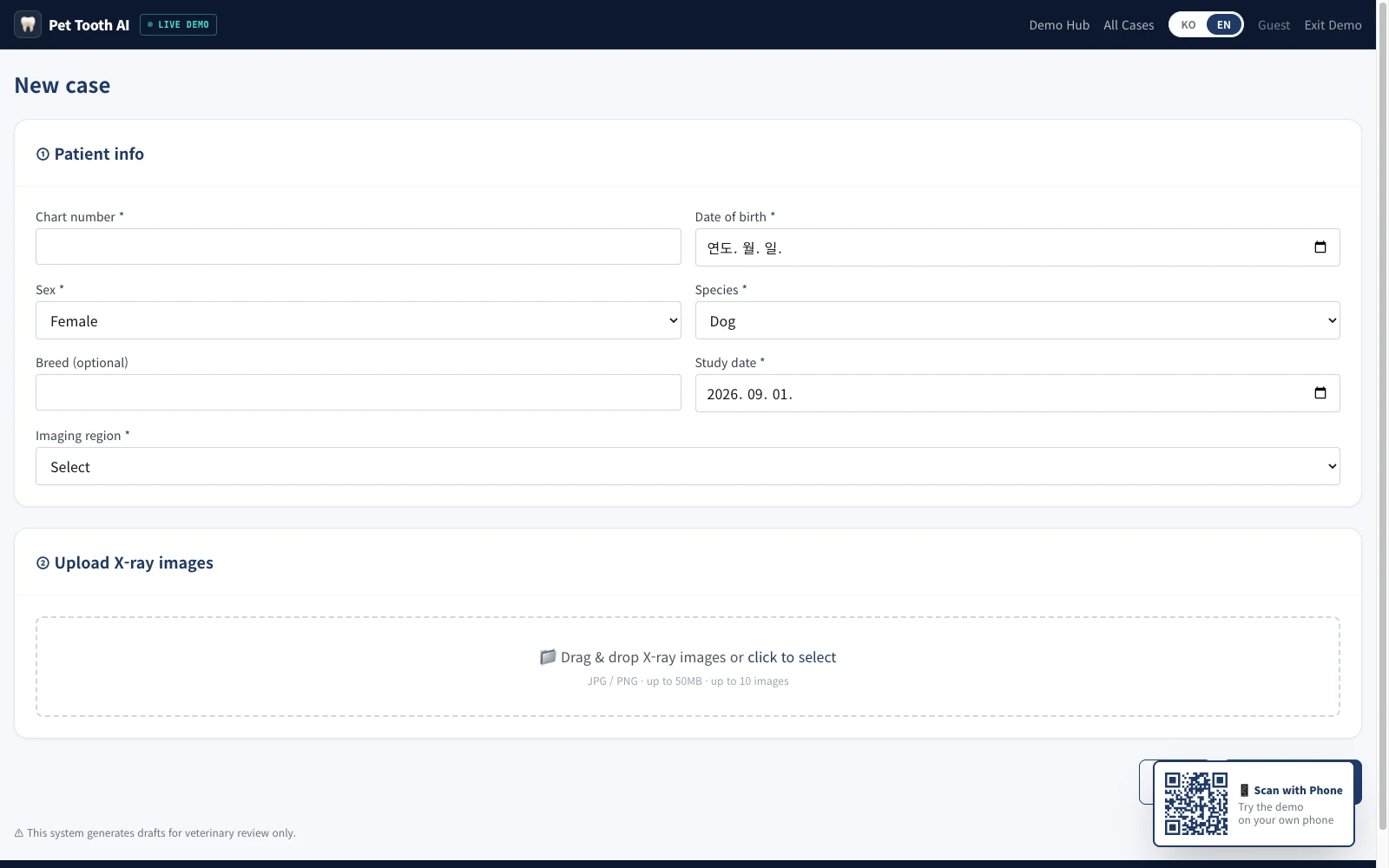
Push automatically from the imaging software in the exam room via the integration API, or upload the X-ray on the web. Patient details — species, age, sex, region imaged — feed into the read.

New case registration with patient details and drag-and-drop X-ray upload
02

AI reads it

The image runs a five-stage pipeline: preprocessing → automatic masking of patient identifiers by OCR → vision-AI reading on an eight-step clinical prompt → schema validation and confidence gating → A4 PDF typesetting. Progress shows in real time.

AI reading progress screen showing each pipeline stage in real time
03

Veterinarian reviews and approves

The veterinarian reviews the finished draft on screen, edits what needs changing and approves it into a final report. Every edit is retained for audit.

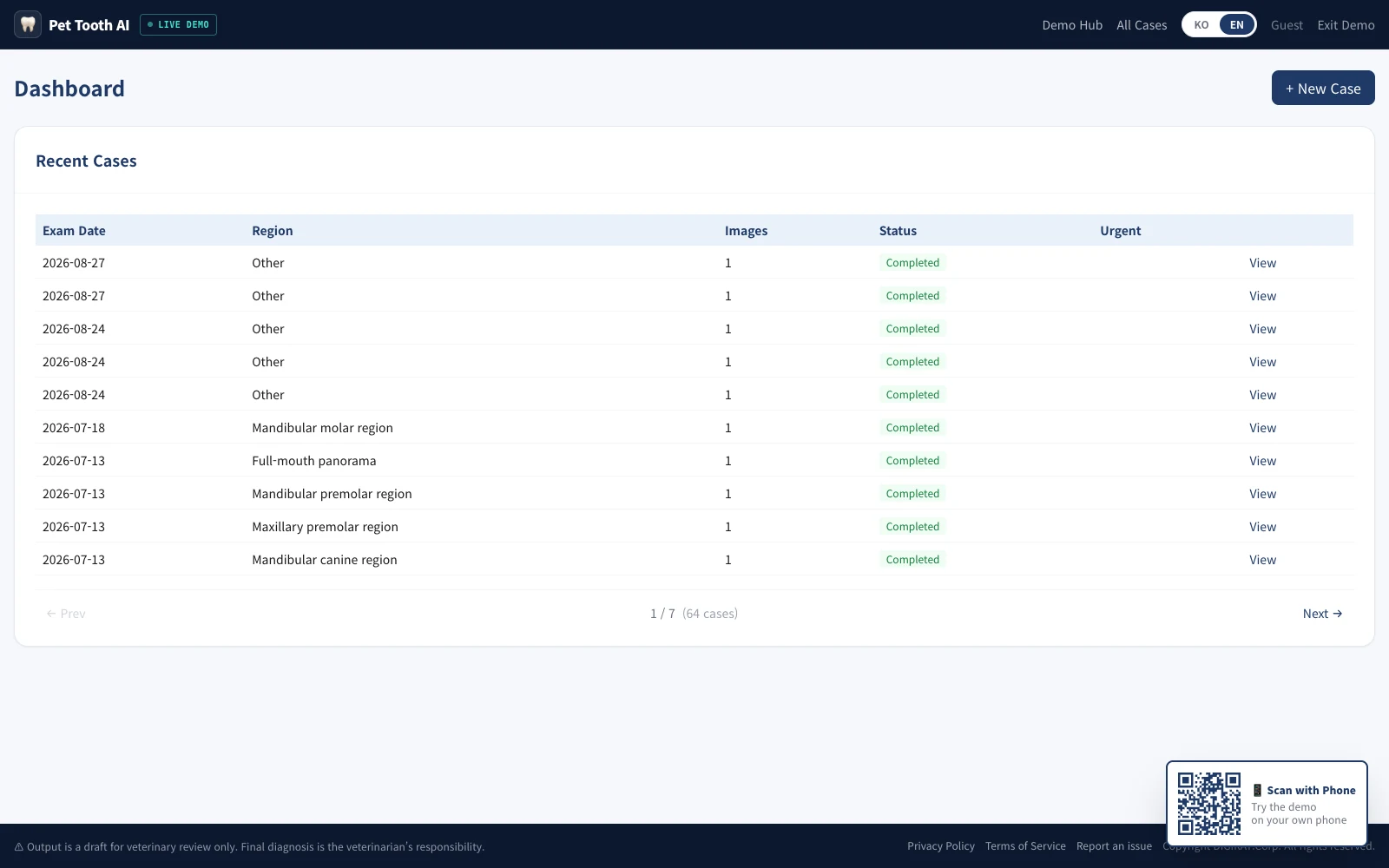
Case list managing the clinic's full reading history by status

The output

A four-page A4 report, in the clinic's own format.

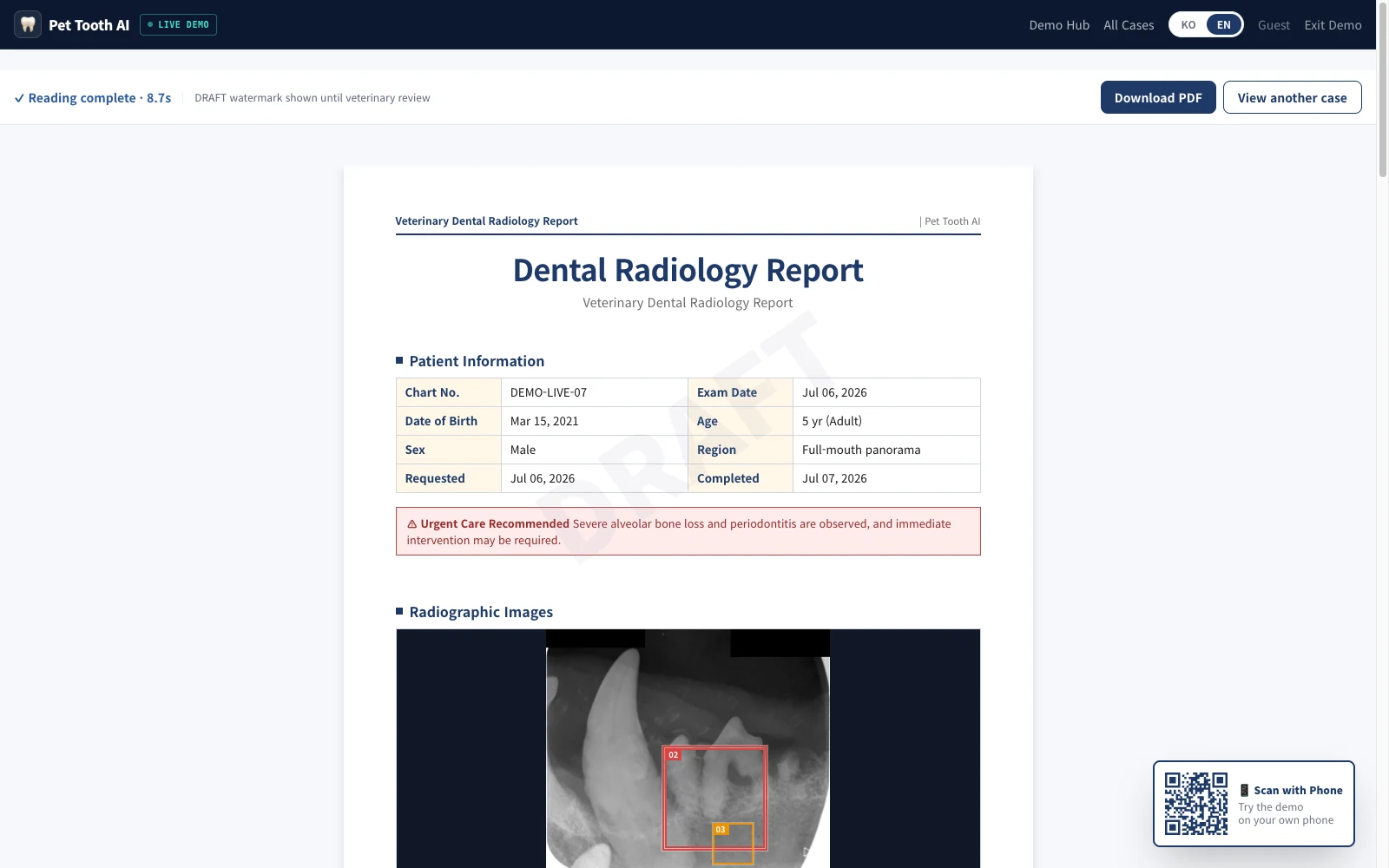
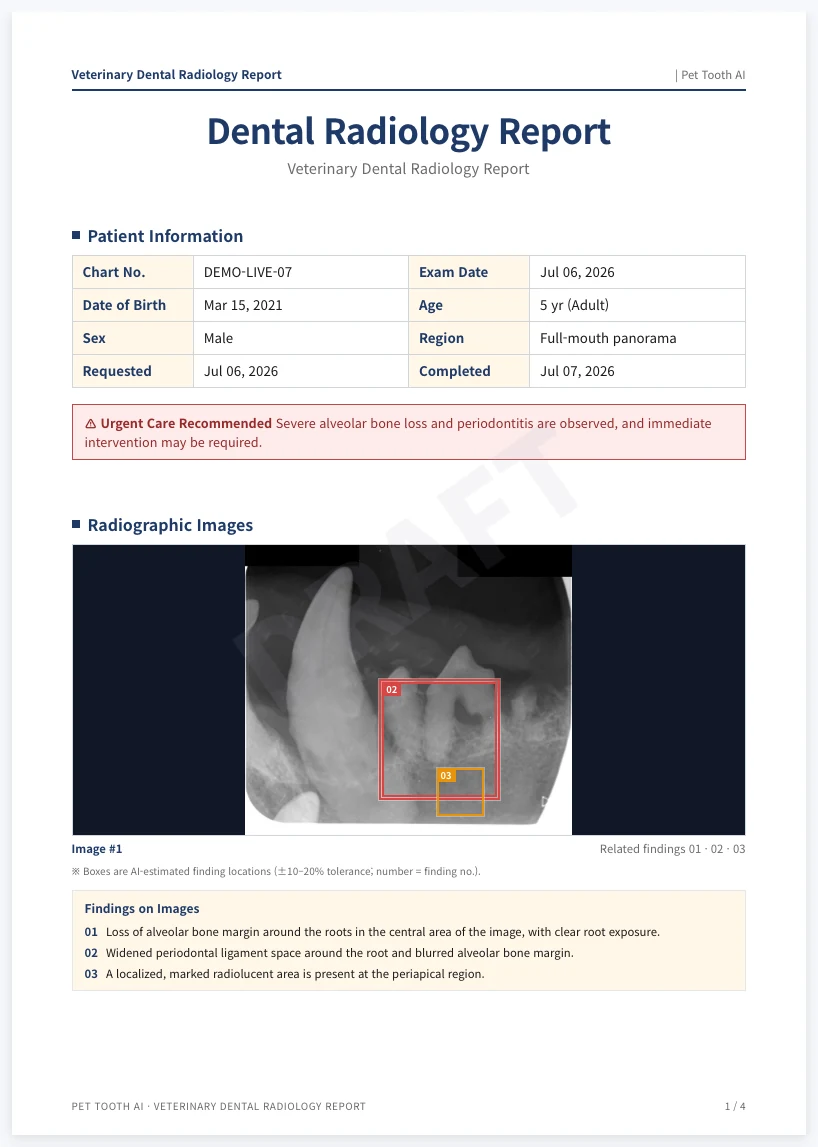
Each page carries the clinic header and a page number, and downloads as a PDF in one click. Below is a real AI-read case — severe, flagged urgent.

Report page 1: patient details, urgent-care banner, X-ray with lesion regions marked
1p · Patient details, urgent banner, lesion locations on the X-ray
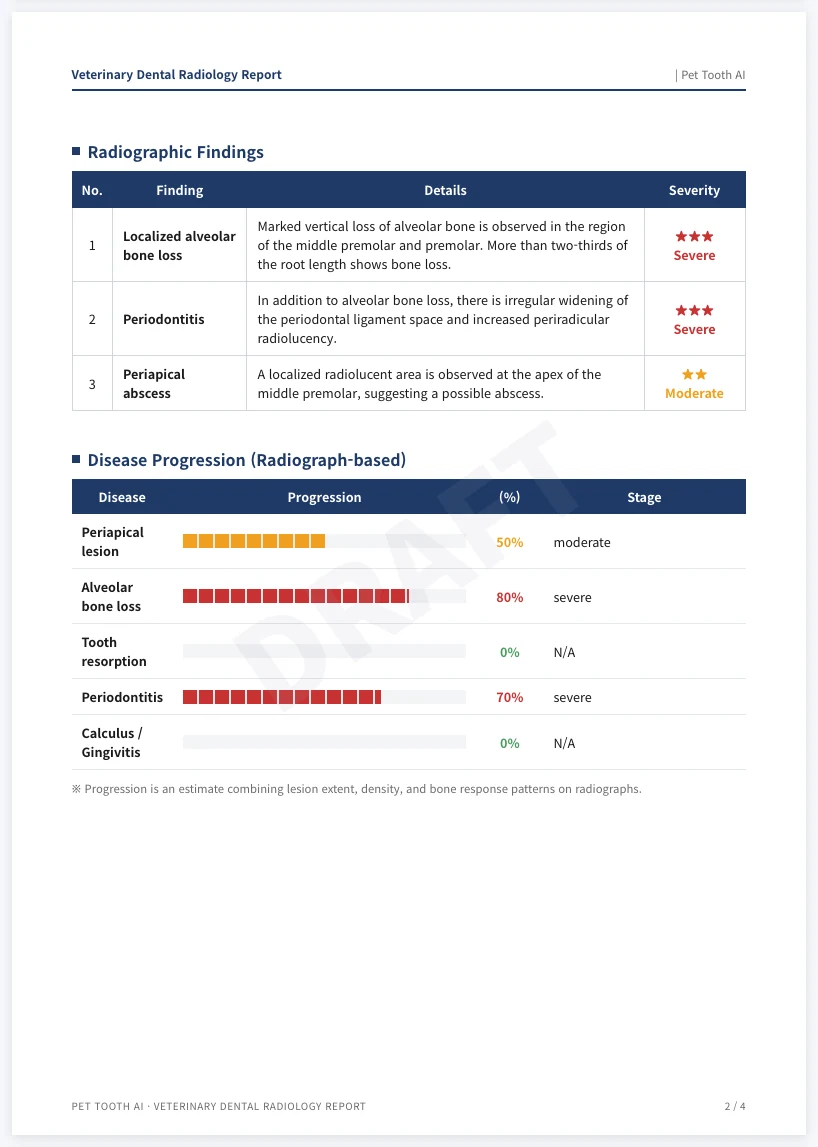
Report page 2: findings table by severity and disease progression chart
2p · Findings by severity, plus progression across five key diseases
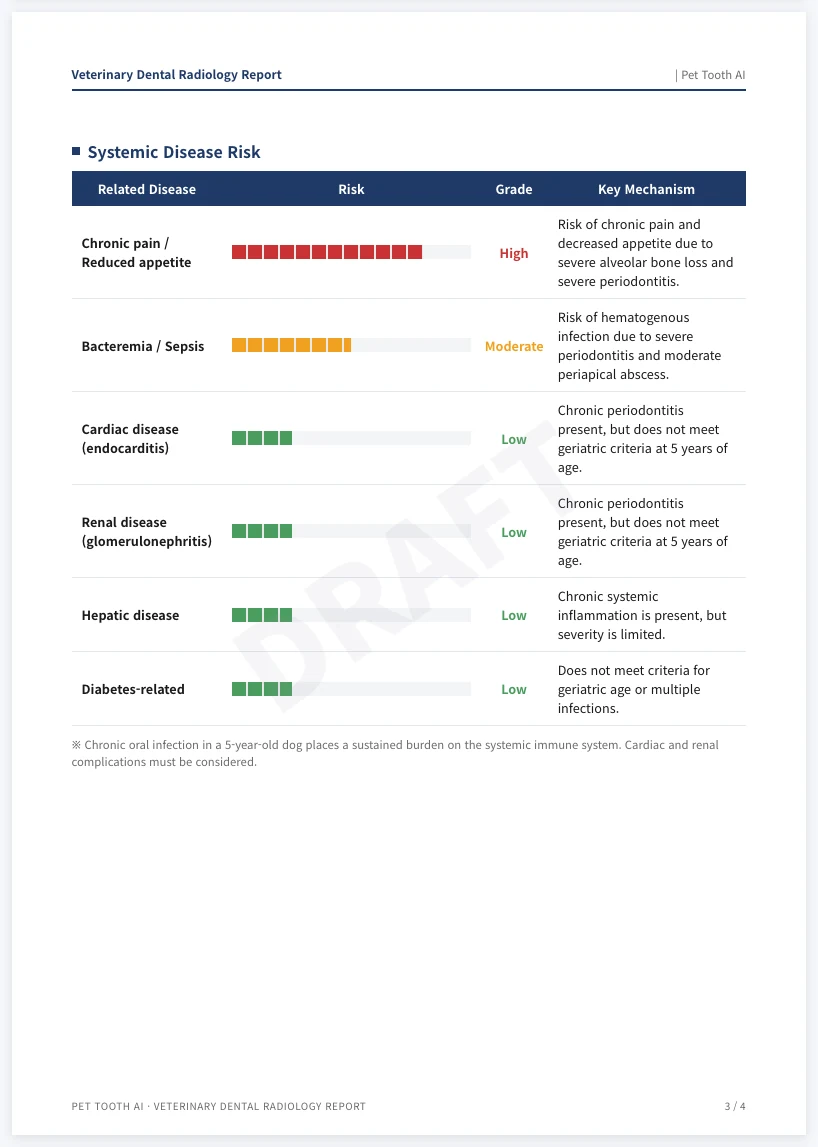
Report page 3: systemic disease risk assessment
3p · Systemic risk — how oral disease bears on heart, kidney and more
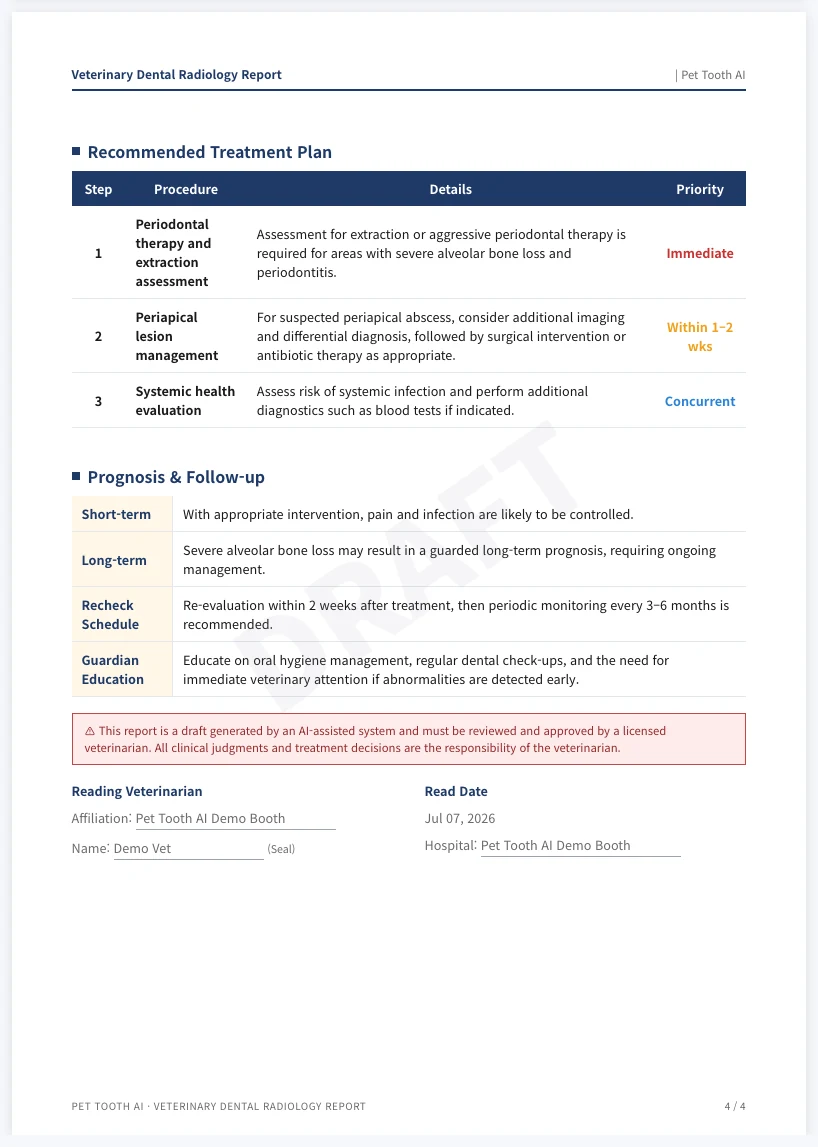
Report page 4: prioritised treatment plan, prognosis and veterinarian signature block
4p · Prioritised treatment plan, prognosis, follow-up and signature block

Capabilities

Eight things it does well.

Evidence marked on the image

Every finding points to a region on the X-ray. The location is stated as an AI estimate, by design, so a veterinarian can verify it.

Fast reads

Upload to finished draft in about 12 seconds, measured — fast enough not to break the flow of an appointment.

Double read, cross-checked

The same study is read twice independently and the server compares. Only findings that agree are marked verified; anything appearing on one side alone is down-weighted, holding back over-reporting.

Identifiers masked automatically

Chart numbers and dates burned into the image are found by OCR and covered before analysis, so identifiers never reach the analysis server.

A4 report and PDF

Single-sheet typesetting in the clinic's format, per-page headers, one-click PDF — for owner consultations and the chart.

Korean and English on the spot

The same case in either language — usable as-is for owners who do not read Korean, and for showing the work abroad.

Imaging-software integration

A push integration (API-key authenticated) sends the image the moment imaging finishes, sitting on top of the existing workflow. Originals received this way are deleted right after analysis.

Urgent-case alerting

When a high-confidence severe finding is detected, an urgent-care banner is placed at the top of the report.

Live demo

Try it yourself. No install, no sign-up.

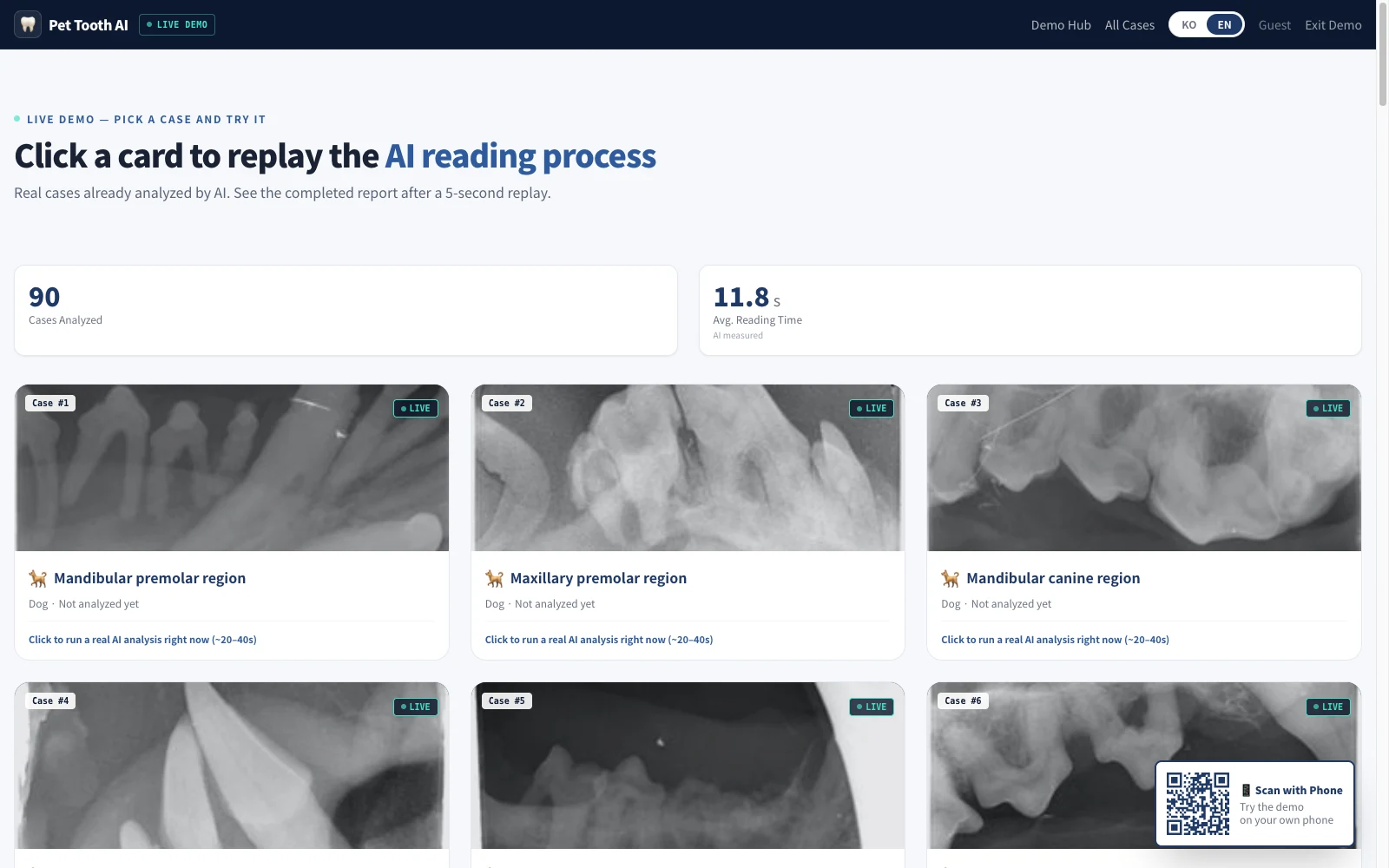
Replay real AI-read cases straight in the browser, from mild to urgent. Click a case that has not been analysed yet and a real analysis runs right then.

Open the demo ↗
Demo hub gallery of completed real analyses

Trust and responsibility

The veterinarian decides. AI output is a draft for review; the DRAFT watermark stays until it is edited and approved. Final diagnosis and treatment rest with a licensed veterinarian.

Privacy. Patient identifiers in the image are masked automatically before analysis, and only clinical variables — species, age, sex, region — are passed to the AI. Originals received through the integration are deleted as soon as analysis completes.

Not a medical device. This is a software tool that produces reference material to support a diagnosis.

Getting started & economics

✓Web — sign up free during the beta, register a case, read immediately
✓Demo — 30 seconds, no account
✓Imaging integration — push API for clinics on DIGIRAY equipment
After the beta: $0.1 per read

Each read settles as $0.1 of $SL credit — the first real "daily reads = daily demand" signal for the protocol. Fiat billing is available, so no crypto handling is required.

For clinics — get started →