A documentation-support tool. AI-generated results are for reference and do not replace a clinician's interpretation.
Proof Network #2 · MediReport

Screening results,
in words people read.

A result sheet is a wall of numbers and reference ranges. MediReport pulls a hospital's screening results — blood, urine, imaging, functional tests — and has generative AI write what each one actually means, at the level of the person examined.

Built for the clinicians and administrators in a hospital screening centre — the people who deliver results to the person examined.
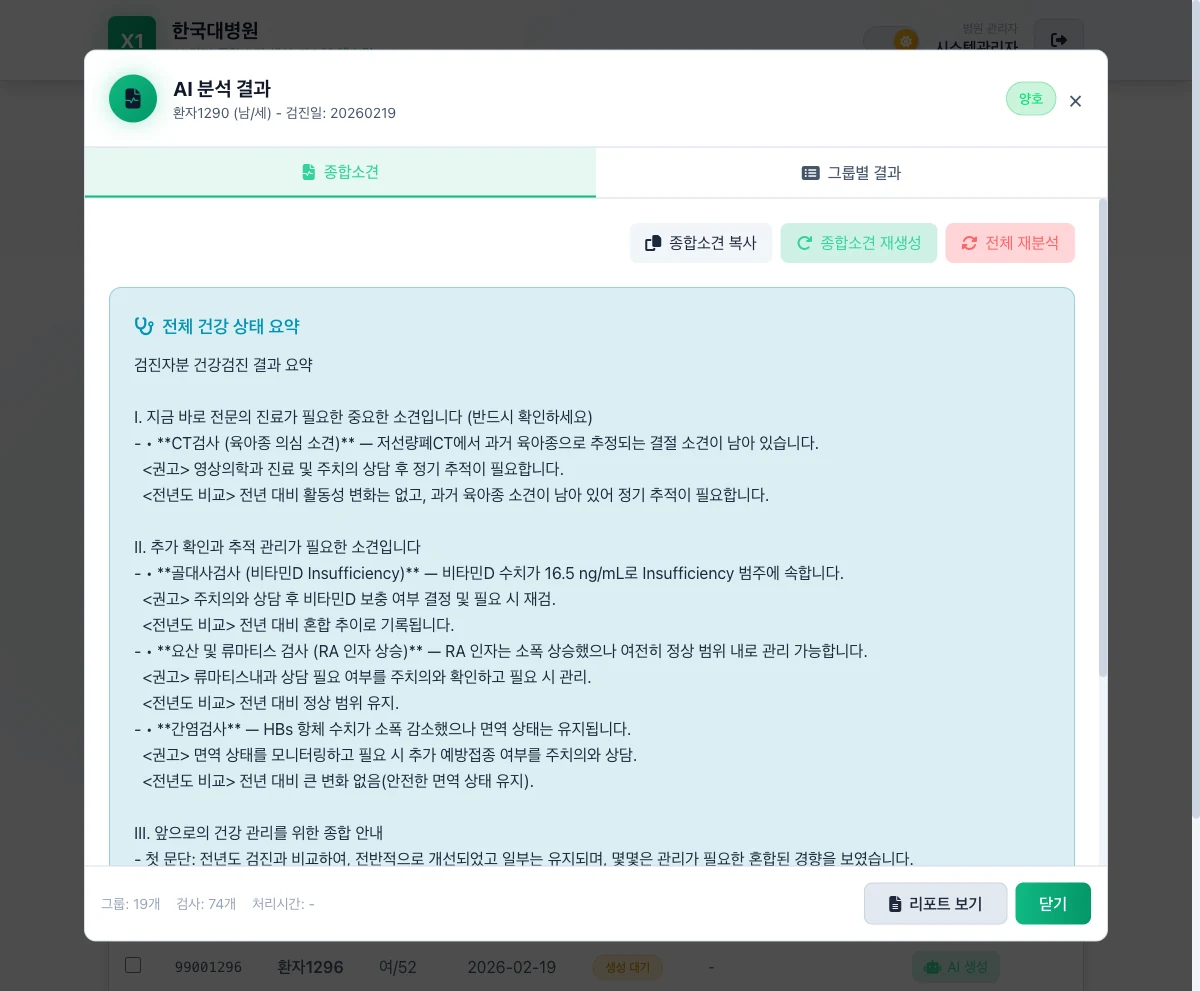
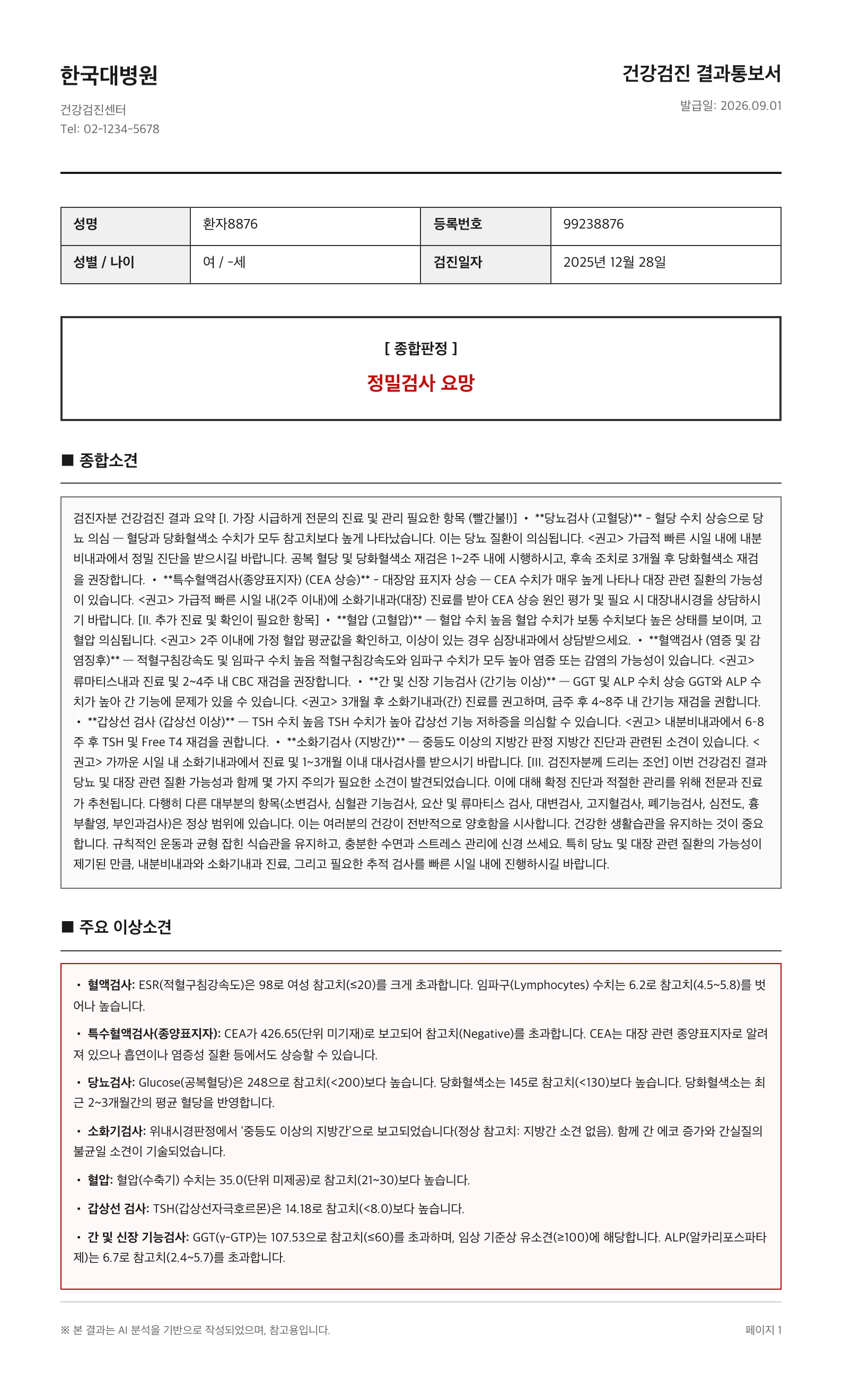
MediReport overall opinion generated automatically, with findings ordered by urgency

What it does

Every year, results fall asleep in a drawer.

Normal findings, said plainly

Results inside the reference range are explained in a way that lets someone stop worrying about them.

Out-of-range findings, with what to do

Anything outside the reference range comes with its clinical meaning and the department to consult — not just a flag.

An overall opinion and a result notice

Group findings are gathered into one overall opinion, ordered by urgency, and typeset into a result notice ready to hand over.

The flow
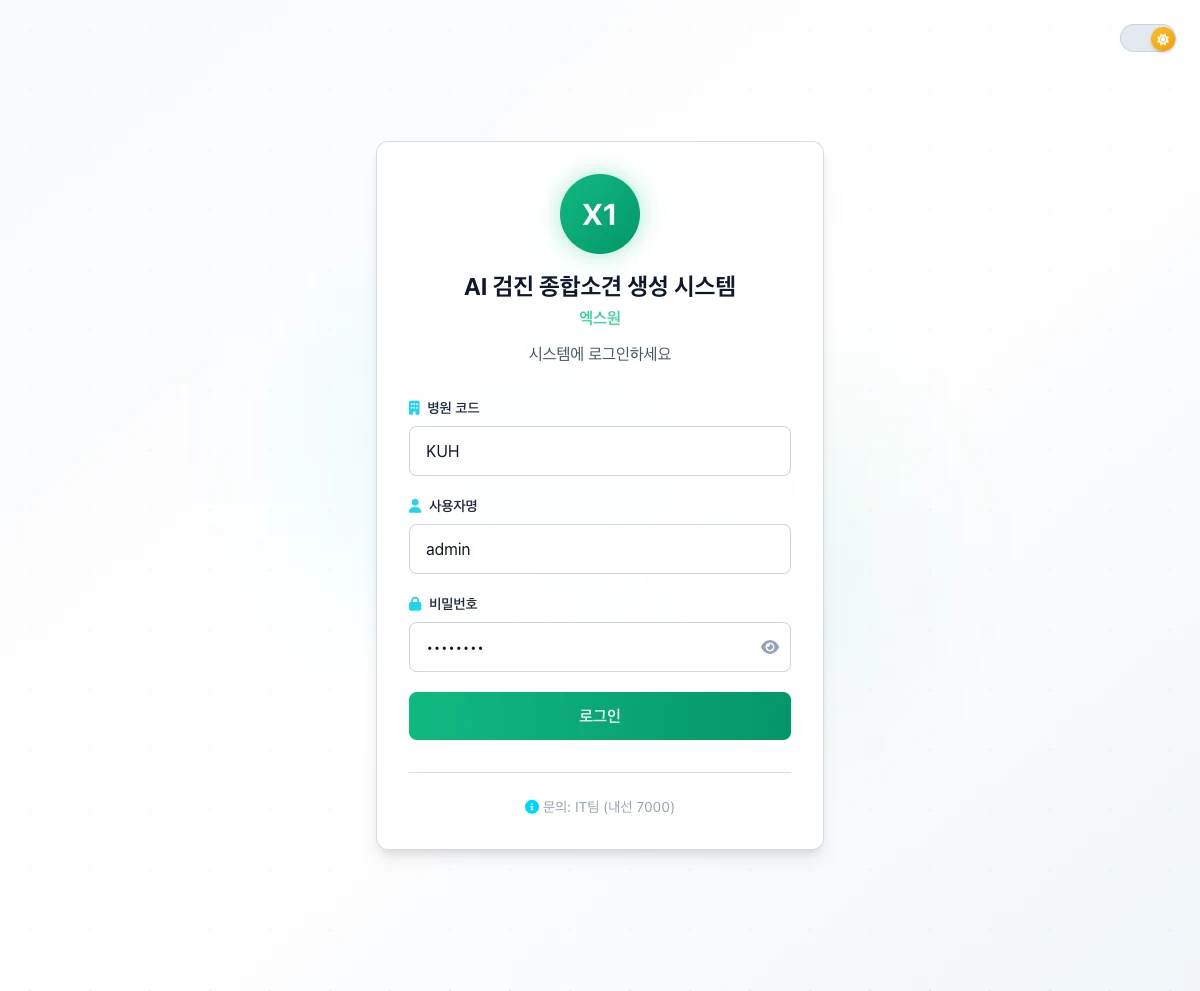
Sign in with hospital code and account
Pick a screening date and a patient
Run the AI analysis — test groups in parallel
Review results by group: risk, summary, recommendation
Check the year-on-year comparison
Generate the overall opinion
Print the result notice

Multi-tenant. Each hospital runs on its own accounts and data — a hospital identifier is carried in the sign-in token, and every request is isolated to that hospital.

Screens

From sign-in to result notice.

Screens shown with demo data.

Sign-in screen with hospital code, ID and password
Sign-in, scoped to the hospital
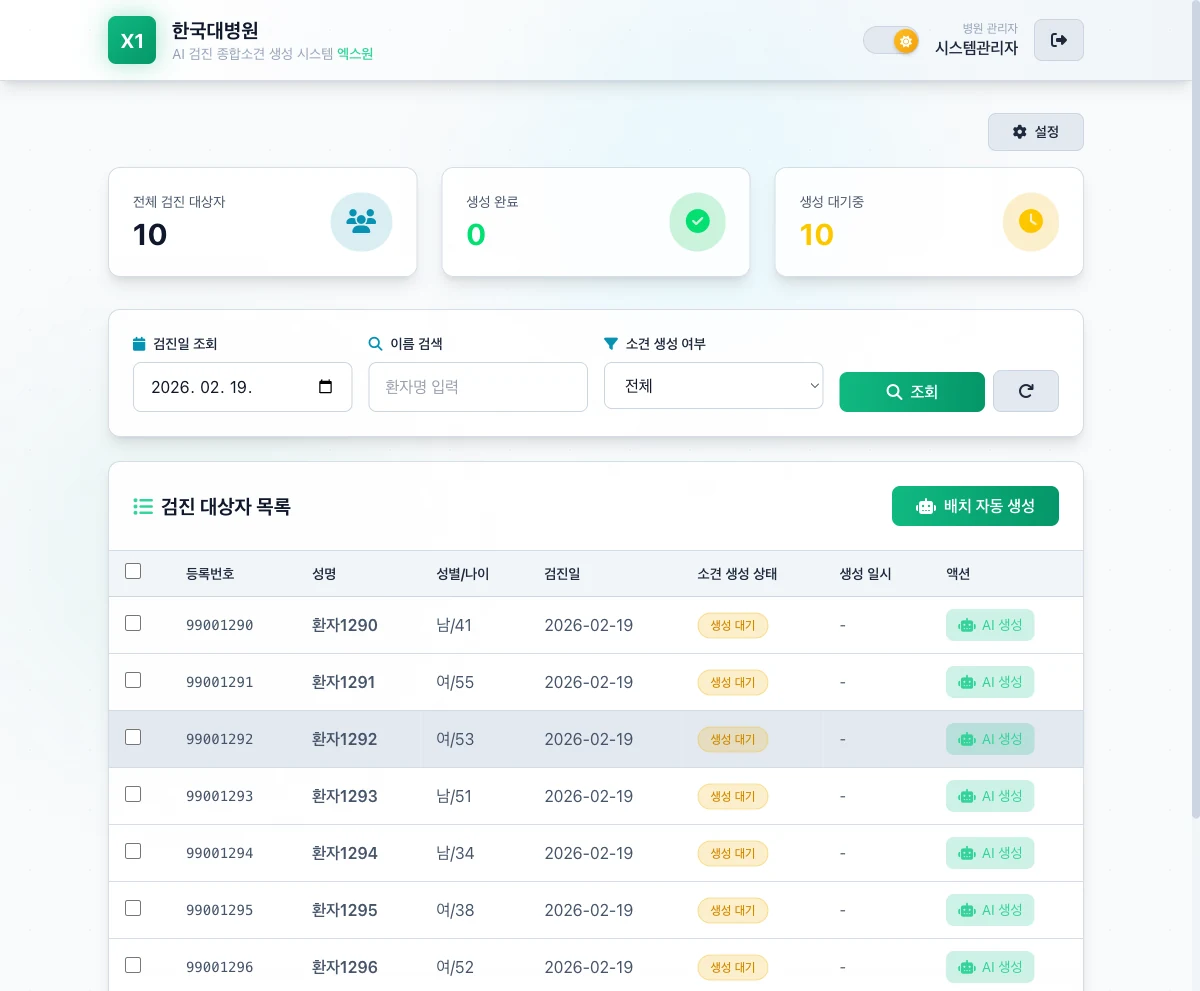
List of patients screened on a given date
Patients by screening date
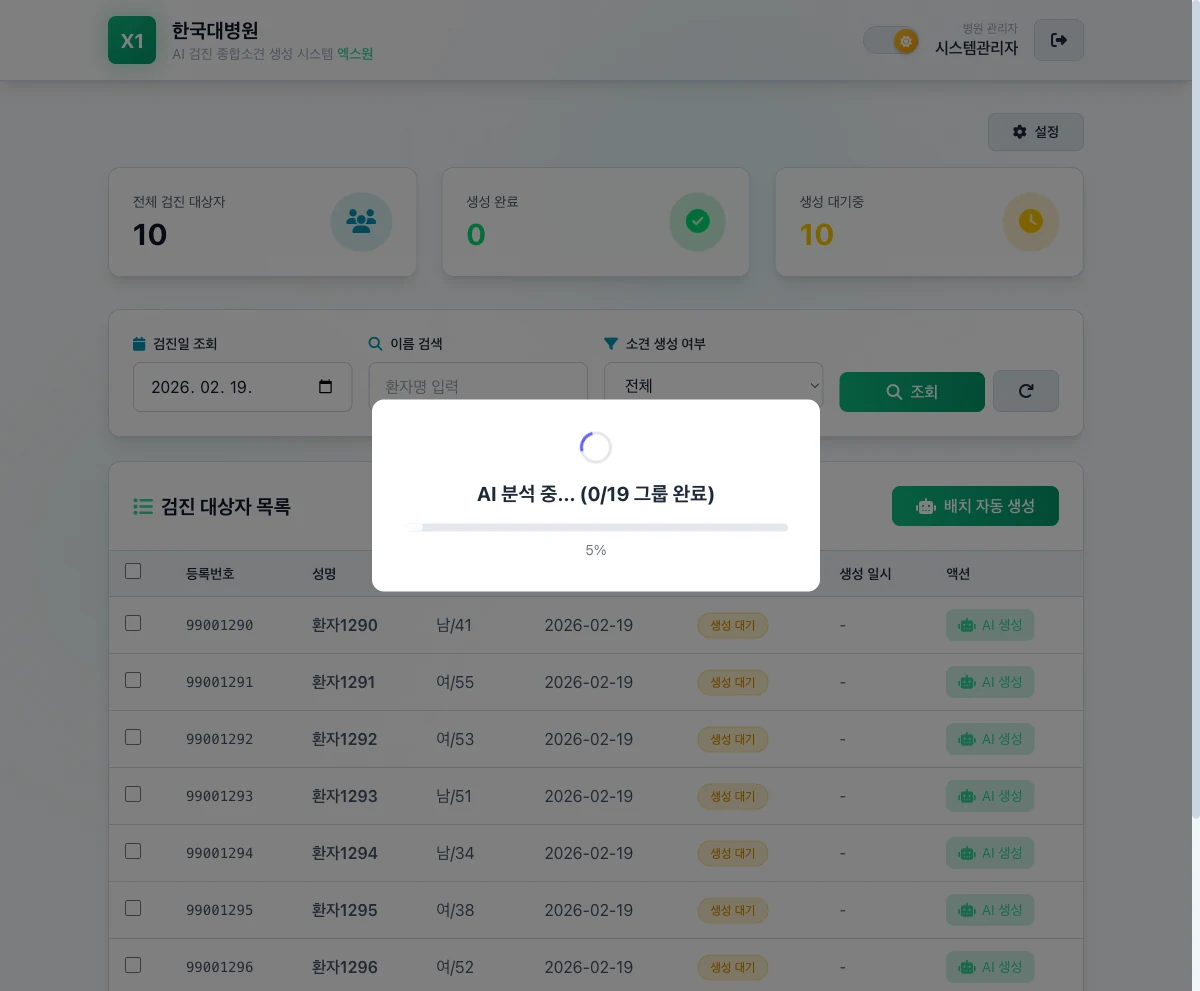
AI analysis progress across test groups
Analysis running, group by group
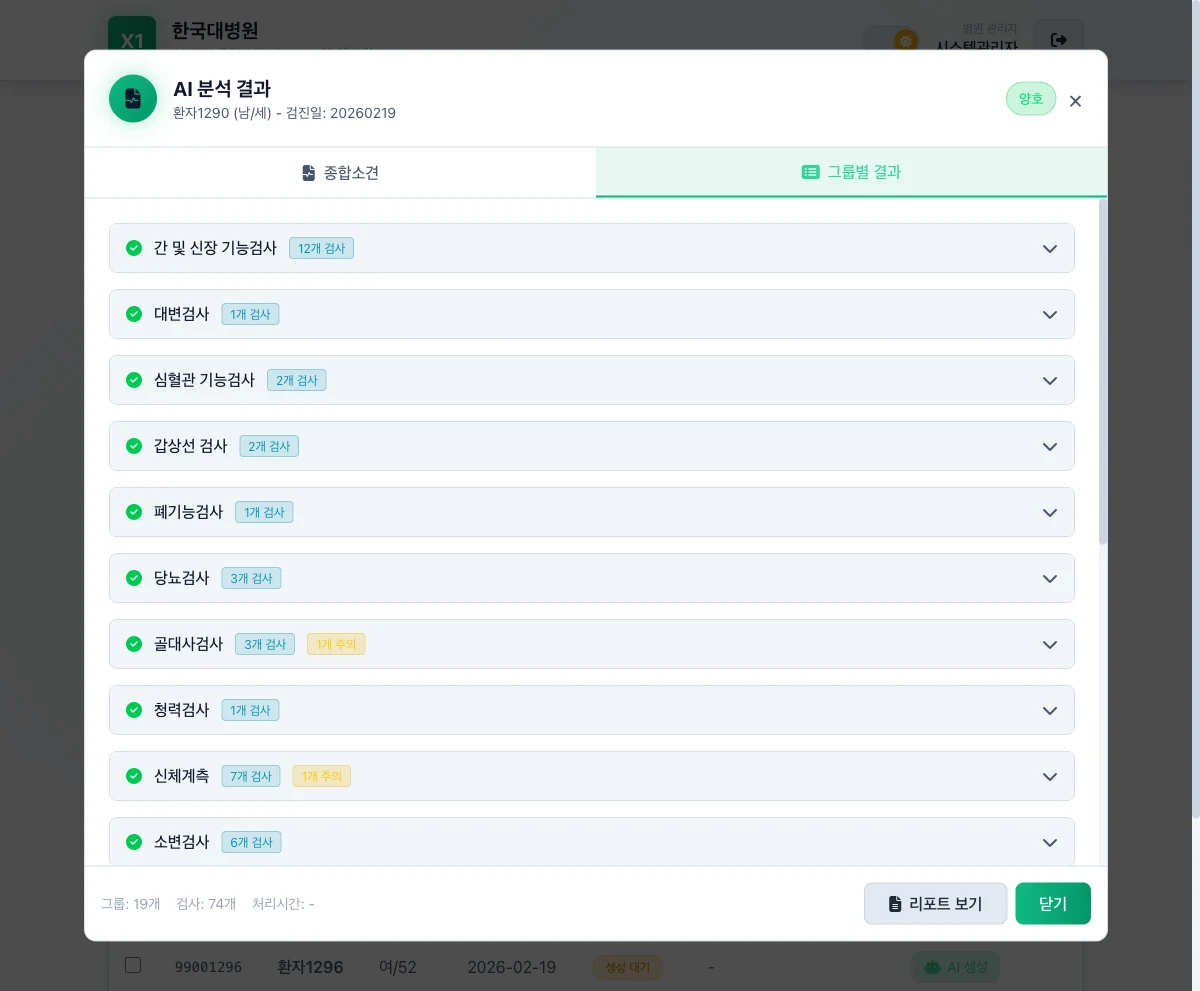
Results listed by test group
Results by test group
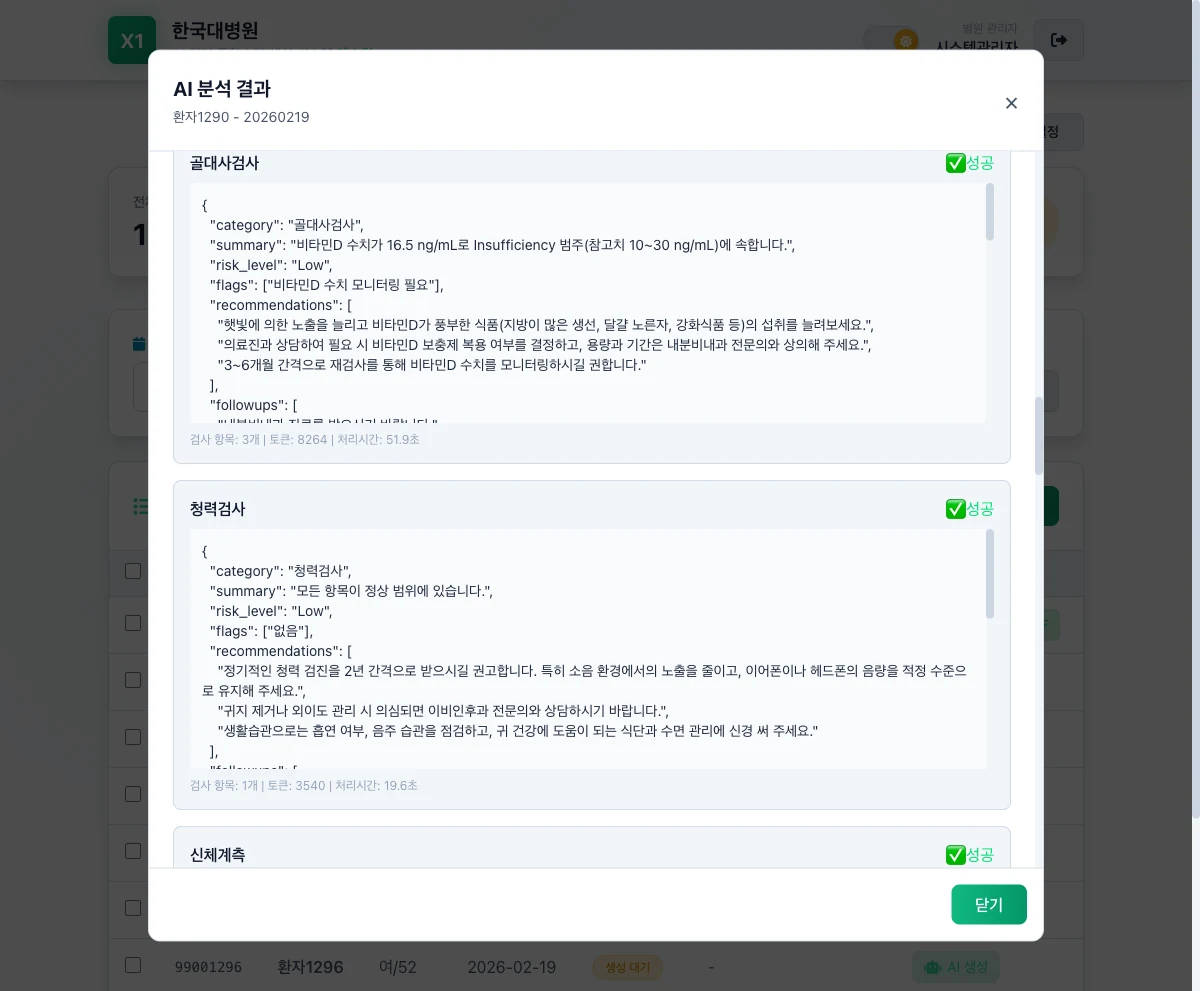
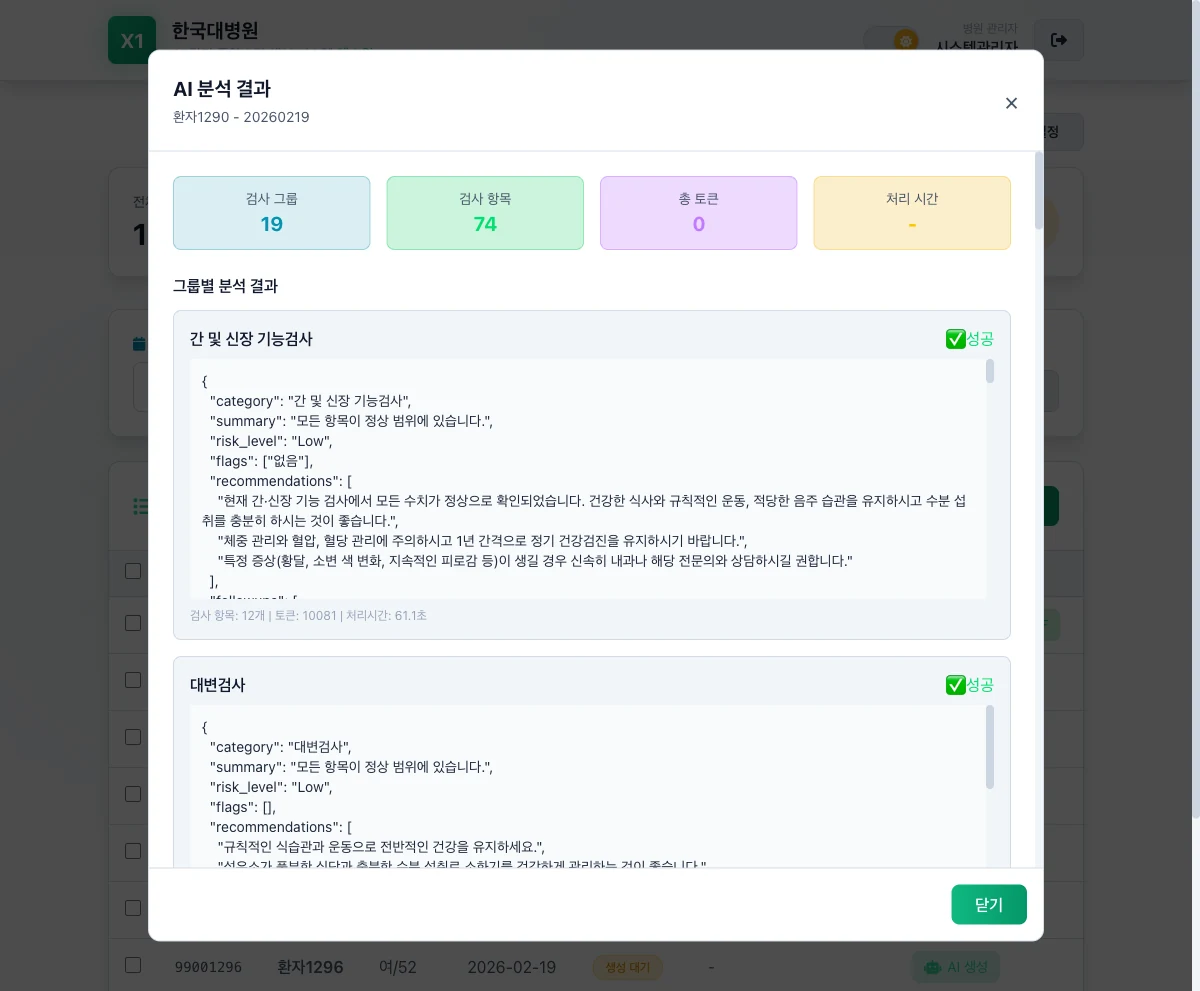
Detailed AI analysis for one test group
Group detail — risk, summary, recommendation
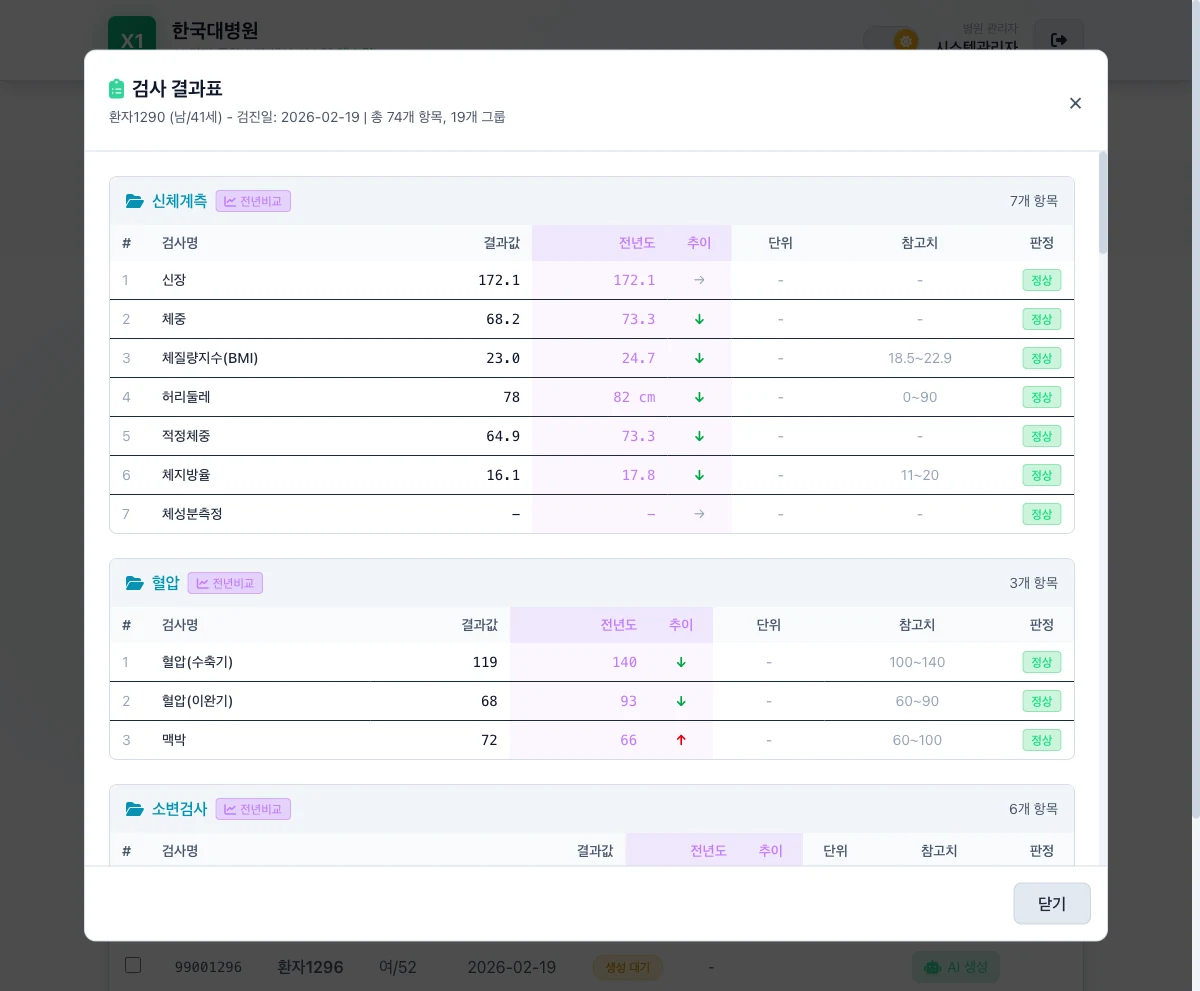
Test result table with values, units, reference ranges and judgement
Result table with reference ranges
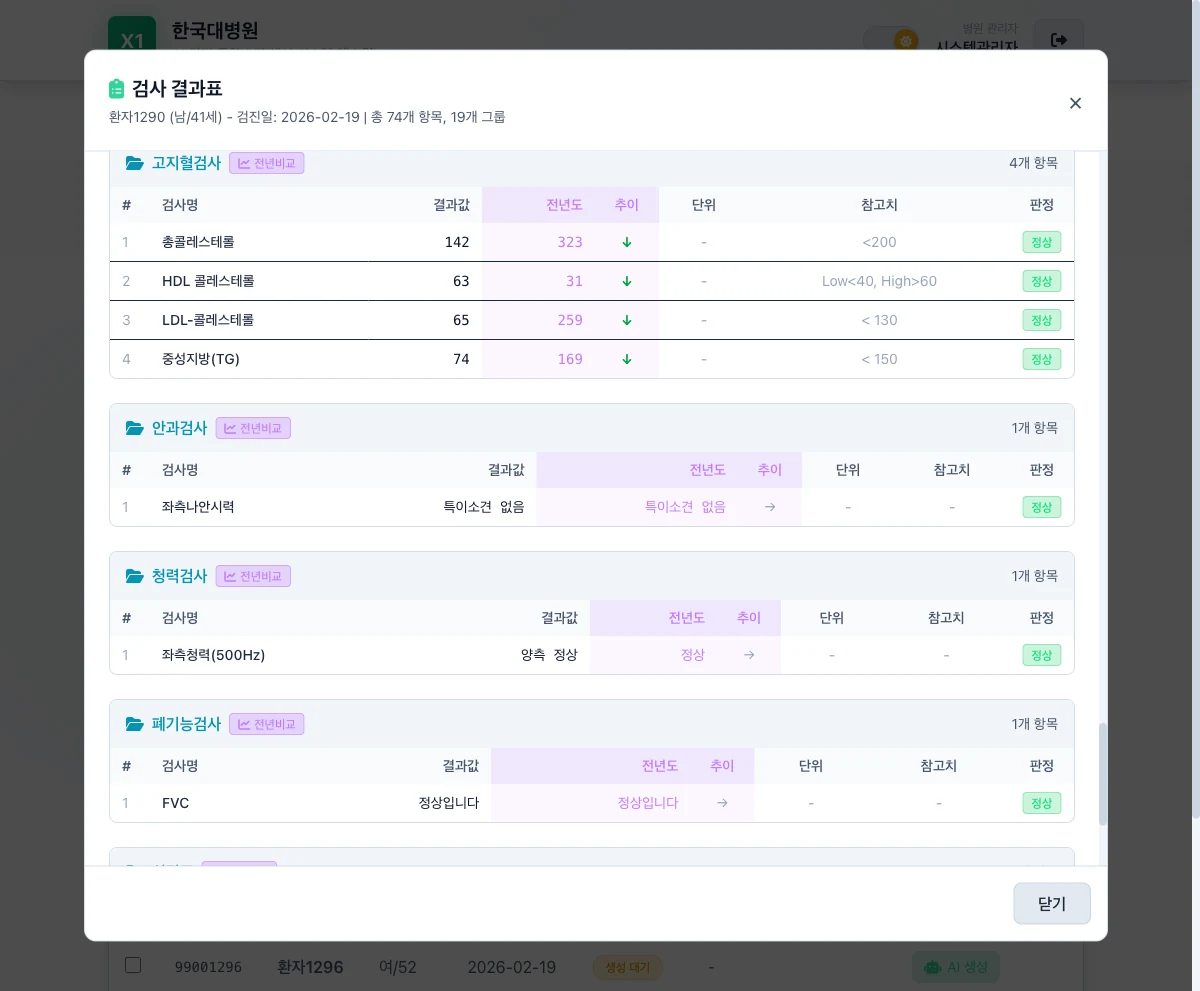
Year-on-year comparison detail
Year-on-year change
Full analysis result view
The full analysis view
Health screening result notice, official version
Result notice — print-ready, official or casual wording

Under the hood

How the analysis is kept in bounds.

01
Input, de-identified

Group results, category-level clinical hints and patient attributes (sex, age) are composed into the prompt. Direct identifiers — name, patient number, date of birth — are stripped before anything is sent to the AI.

02
Schema-constrained output

The model is forced to answer only in a fixed JSON schema — category, summary, risk level, flags, recommendations, follow-ups — so nothing free-form reaches the report.

03
Risk-based review routing

Anything coming back as High risk is marked for mandatory clinician review, and every result carries an AI-generated disclosure.

04
Overall opinion

Group results are gathered a second time to produce the overall opinion, ordered so the most urgent item is read first.

Model deployment

The default is a hosted OpenAI GPT API. For hospitals that require analysis to stay on the internal network, it switches to an on-premise model such as MedGemma on KT GPU infrastructure.

System

demoResult lookup, AI analysis and reports — the screening-centre workstation
React 19 · TypeScript · Vite · Tailwind
adminTest groups, clinical hints and prompt management
React 19 · TypeScript · Zustand · React Query
backendAuthentication, analysis orchestration, AI integration, API
Spring Boot 3.2 · JPA · JWT · PostgreSQL
dataScreening data and analysis results, read-only link to the hospital EMR
PostgreSQL 15

Test results are read from the hospital EMR read-only and used as analysis input; nothing is written back.

Pricing

Metered · per report

Pay only for reports generated, settled in $SL credit.

Enterprise Credit Pack

Institutions pre-purchase credit in bulk (fiat), converted to $SL on the backend — the familiar AI-API model. No crypto handling required.

Talk to us
Why centres adopt it
✓Cuts report-writing time for clinicians
✓Plain language raises comprehension and follow-up
✓Consent-based, pseudonymised data handling
✓Plugs into the existing screening workflow